
Charlotte Brontë’s novel, Jane Eyre, is classified as a Gothic romance, but to me, this enchanting book is so much more. In our Jane Eyre book review, I’ll convey the many ways that the heroine, Jane, spoke to me—she uplifted me with her faith, and cautioned me that if I want to stay true to myself, I will have to make sacrifices, just like she did.
Don’t worry, dear reader, I will not reveal the ending
But, that’s not all—there’s still so much more to tell about this wonderfully engaging novel. However, dear reader, trust that I will not reveal the bittersweet ending. Nor will I reveal the many twists-and-turns in Jane’s wonderfully bittersweet but blessed life.
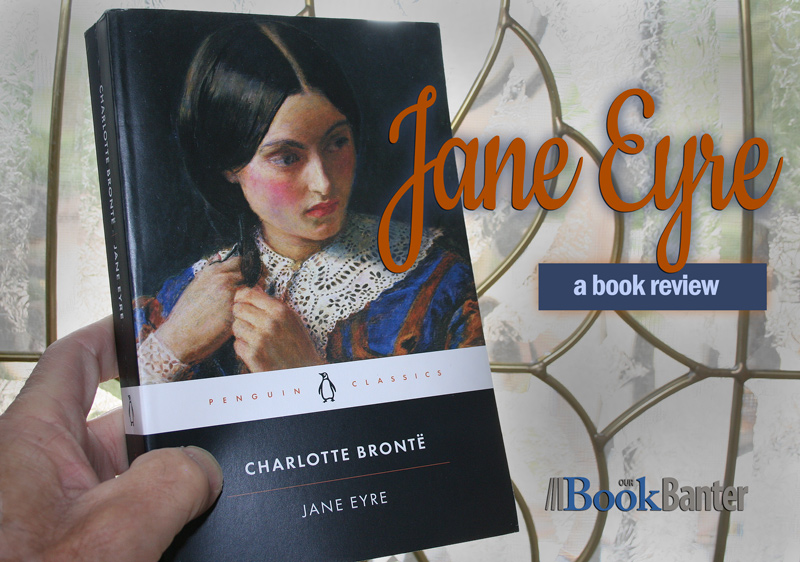
Jane Eyre book review
The Jane Eyre plot
Jane was an unwanted orphan
As the main protagonist, Jane Eyre starts telling us her tragic, heart-wrenching story when she was only 10 years old. She was orphaned, but was eventually adopted into a highly dysfunctional family.
The mother of the family, Aunt Reed (or Mrs. Reed), pampered her own biological children, but treated Jane unfairly and harshly. As Jane told her story, I also felt the stingingly hurtful taunts from the other children, and felt the cruelly harsh punishments Jane received from her aunt.
Jane was not only physically tormented, but she was psychologically tormented also. Fortunately, a caring adult saw what was happening and helped Jane get placed into Lowood, a religiously aligned home for orphans.
Jane spoke out against injustices
While a student at the orphanage, Jane excelled at academics. But, the staff also punished Jane when she refused to conform to what she considered unfair practices and punishments. As a teenager, Jane was developing a strong moral system of beliefs, and she often spoke out against social injustices.
Jane loved the outsiders and the underdogs
Because of her harsh, unfair treatment as a child, Jane developed a strong need to protect other people who were treated unfairly. She was especially disturbed when Helen Burns, an older classmate, was punished and even humiliated by the school’s administration.
Jane developed a deep friendship with Helen, and the lessons Helen taught Jane about life would follow her throughout her own life.
Eventually, Jane leaves Lowood and gets a job
Jane was academically gifted, and she enjoyed learning new things. While the Lowood’s hard-core religious administration did not like Jane, they allowed her to teach there.
Eventually, Jane grows frustrated with the religious hypocrisy at Lowood, and gets a job as a governess at the Thornfield Hall estate.
At this point, I feel I should not reveal any more of the plot. Otherwise, I might spoil the reading pleasure for our dear readers.
Jane Eyre principal characters
Jane Eyre:
Our principal protagonist, Jane Eyre, was an unwanted orphan. However, thanks to her love of reading, and her desire to learn, she excelled at her academic studies.
Jane was a gifted artist
In addition, Jane was a gifted artist, and loved to obsessively draw and paint whenever she had the time. Her artistic talent mostly went unnoticed until later in her life.
She became a governess
Those academic skills later helped her become a valued governess at the Thornfield Hall estate. As governess, Jane’s main assignment was to teach and supervise the owner’s unwanted French daughter, Adèle Varens.
Unfortunately, the estate’s owner treated Adèle poorly, comparable to how Jane’s Aunt Reed had treated her as a child. Because of those similarities, Jane developed a strong love and protective bond for Adèle.
Jane was developing a quiet infatuation
Ironically, in her own quiet way, Jane was also developing an attraction to the estate’s owner, Edward Rochester.
And she had a quiet demeanor
As far as Jane’s personality goes, she was a very quiet person. In addition, Jane dressed neatly, but simply. For instance, she was not ostentatious with the clothes she wore. Despite her quiet demeanor, she forcefully spoke up when she saw someone else being mistreated.
Edward Rochester:
Jane’s employer, Edward Rochester, was wealthy. In addition to owning the Thornfield Hall estate, he also traveled extensively throughout the world. And, he wined, dined, and romanced some attractive and famous women.
Despite his attractiveness to the opposite sex, Mr. Rochester was not very good looking. But, to make up for his homely appearance, the owner spent his money by attending and throwing long, expensive parties with the other wealthy elites in his neighborhood.
While Jane’s personality was much different from her employer’s, she was able to see the good characteristics that he usually hid from other people. So, Jane eventually became quietly smitten with her mysterious and peculiar boss.
Despite her feelings, Jane always referred to Mr. Rochester as ‘Master’, which was a common sign of respect. And, Jane did develop a deep feeling of respect for her Master.
Mrs. Reed, or Aunt Reed:
The woman that Jane knew as Aunt Reed or Mrs. Reed was her guardian at the beginning of the story. She taunted Jane, and punished Jane unfairly. In addition, the cruel Mrs. Reed encouraged her biological children to also cruelly mistreat Jane.
Those earlier bad experiences with her Aunt Reed would greatly impact Jane. From then on, Jane made it a mission to always speak up and defend the mistreated and the outcast. Undoubtedly, Jane knew how badly it felt to be considered unwanted, and to treated like an outsider.
Adèle Varens:
The eight-year-old Adèle was a ward of Mr. Rochester, and was living at Thornfield Hall. She was an upbeat but spoiled girl, and she adored Mr. Rochester, despite being mistreated and disparaged by him.
Adèle was happy when Jane Eyre became her governess, and quickly became a devoted student. Jane also developed a deep empathy for this mostly unwanted but talented little girl.
Helen Burns:
Helen Burns was an older student and resident at Lowood, the orphanage. Jane saw how the school administration treated Helen unfairly and often gave her punishments designed to humiliate her. She was disturbed because Helen had accepted those unfair punishments without disputing them.
Slowly, Jane and Helen became very close friends, even though their personalities were different. Jane remembered how she was unfairly punished, and she winced everytime that Helen was unfairly punished at Lowood.
Helen and Jane’s friendship was a meaningful, poignant, and bittersweet part of Jane’s life. Other than that, I can’t reveal anything more about Helen and Jane—I don’t want to ruin your reading pleasure.
Of course, there was a film adaptation of the beautiful Gothic romance novel, Jane Eyre. However, based on this trailer, the film looks more like a horror movie than a bittersweet romance novel. As usual, I definitely prefer the book the best!
Jane Eyre book review continued
I immediately empathized with Jane Eyre
By the third page, I was drawn into Jane’s troubled world
Even though Jane was only a 10-year-old orphan girl at the beginning of the story, I was immediately drawn into her sad young life and lonely young world. In fact, I empathized with Jane completely.
The author was a gifted storyteller
Part of the empathy was due to the tremendous skill of Charlotte Brontë, the author. Her storytelling expertise was engaging, and even though I didn’t really like some of the characters very much, I could still understand why they behaved as they did.
I felt what Jane felt
But above all, I really cared about Jane, and I suffered when she suffered. I felt humiliated when Jane felt humiliated. And, I felt Jane’s bittersweet triumphs, too.
Jane Eyre book review
Was Jane autistic?
While reading this novel, I felt that Jane shared many of the characteristics that Charlie did in the novel, The Perks of Being a Wallflower. Indeed, both Jane and Charlie shared many of the characteristics described for an autistic person.
Some of the personality traits that Jane shared with autistic people include:
Unconventional, struggled to fit in
While many people might be unconventional and struggle to fit in, Jane was extremely unconventional and found it difficult to connect with her classmates as a student, and with her workmates as an adult.
Literal and honestly blunt communications
Often, Jane would be rude while speaking with other people, but wouldn’t realize it—she was just being completely honest.
For instance, when a housekeeper asked Jane if she had ever read the Bible and ‘the Psalms’, Jane replied bluntly but honestly:
“Psalms are not interesting.”—Jane Eyre
The housekeeper replied: “That proves you have a wicked heart…” While I loved Jane’s honest response about the Psalms being boring, her reply might have been a little too blunt.
Jane preferred solitary activities
Even though Jane had to interact with other people as an adult, she often preferred to spend time alone while drawing, painting, and reading. In fact, at one stressful period in her adult life, she spent more than a week in her room, just painting and reading.
Sensitive to stimuli and intense emotions
While she was a student, Jane would get almost uncontrollably angry when she saw the Lowood staff mistreat her friend, Helen Burns. Her extreme emotions would cause her to say and to do foolish things—things that other people might handle with more tact.
Now, I don’t want to give away too much of the plot, but there was a time when Jane was going to marry Mr. Rochester. But, Jane was becoming extremely upset about having to wear more expensive, flashy clothes, and having to change her name to Jane Rochester, or Mrs. Rochester.
She didn’t like those ideas for changing her life, and her emotions suddenly bubbled to the surface, and she did something that seemed to me to be very foolish. In fact, she almost lost her life because of her actions on that morning. But, that’s all I can say about that!
Specialized, almost obsessive interests
Jane loved her art, and spent a large amount of time to hone her craft. In the last part of the book, she had many offers for her artwork, and some wealthy people in her neighborhood offered to pay her to paint portraits of their family.
Also, great literature made Jane an obsessive reader. She was well-read, and her students benefited from her specialized, obsessive interests.
Many people in history have had autistic traits
While we hear a lot about autism today, autism was common throughout humanity’s history—autism is not a new phenomenon, and it certainly is not caused by vaccines!
In fact, I am certain that my grandfather was autistic. He was noncommunicative, but when he did speak, he mumbled. While speaking, he would often use his hands as his own form of sign language. And, he wasn’t deaf, so that doesn’t explain his speech patterns.
However, he was very bright, and he obsessively read. Many times, he would often get lost in his own world, and not realize or notice people around him. In addition, he had no close personal relationships.
Despite my grandfather’s ‘issues’, he lived and worked, and somehow survived, just like Jane Eyre did. And, there were many more people in history who we can all think of, who had similar autistic characteristics. For instance, Benjamin Franklin, Albert Einstein, Leonardo DaVinci, had autistic characteristics, and there were many more!
Jane Eyre book review
One downside of the Jane Eyre novel
The novel was too wordy
Unfortunately, the Jane Eyre novel does have one big downside, but it is one weakness that many novels from that era shared. So, what was this downside? Well, I thought it was too wordy, and too long and drawn out!
For instance, I remember in one part of the novel where Mr. Rochester was trying to convince Jane that he loved her. He just went on and on, and then on some more. It was just too much! I’m surprised that Jane didn’t fall asleep.
However, I know that Jane did not fall asleep! Because, whenever Mr. Rochester spoke to her, because she was becoming quietly infatuated with him. So, maybe it was good that Mr. Rochester took so long and spent so many words conveying his feelings.
Each poetic word was a valuable expression of life
Because, I think that every thought expressed in this novel was almost priceless! And, if that means having to read through a lot of dense, descriptive words, then so be it!
I think I’m a better person because of hearing all the revelatory, and poetically expressed words of each character. In fact, this novel was a poetic revelation of a lifetime!
FINAL VERDICT:
Jane Eyre book review
Jane Eyre spoke to me
I really, really loved this heart-wrenching, bittersweet book. Charlotte Brontë’s novel, Jane Eyre, spoke to me and reached deeply inside my emotions.
I empathized with Jane
Because of Jane’s unique personality, I found her an easy person to empathize with. I could understand her motivations, and I could feel her pains and her triumphs.
Jane was true to herself
What I loved so much about Jane is that she stayed true to what she believed in. She was true to herself—she understood her shortcomings, but accepted herself just as she was. Some of that self-acceptance came about because of her friendship with Helen Burns.
Characters were so real
Not only did Jane Eyre become a real person to me, but the other characters were also very believable. In fact, I could even empathize with some of the characters who I didn’t like so much.
Jane Eyre is must-read novel
The novel, Jane Eyre, is a must-read story for any lover of great literature. Charlotte Brontë did a brilliant job as she told her beautiful, engaging story about the wonderful person named Jane Eyre.
Thanks for reading our Jane Eyre book review. If you’ve already read Jane Eyre, please share your thoughts in the comments section below.
Content and photos by Doug Martin and Our Book Banter.


