We Were the Lucky Ones, written by Georgia Hunter, is a book based on the author’s family history during World War II. The book is a thought-provoking and heart-wrenching historical novel that shows how one extended Jewish family suffered, and how they survived while Nazi fascism spread its tentacles-of-hate throughout Europe. Fortunately, our We Were the Lucky Ones book review does not include spoilers that might ruin your reading pleasure.
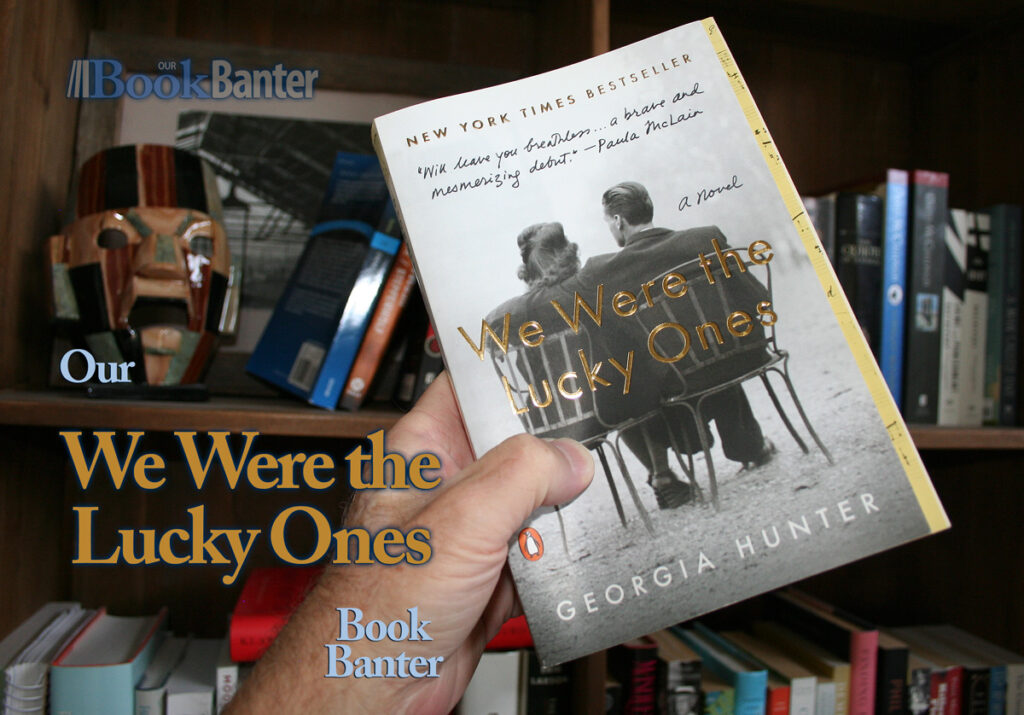
We Were the Lucky Ones book review
Real-life characters interwoven with historical events
The author, Georgia Hunter, used the historical changes that were happening throughout Europe to show how her Jewish family was adversely affected. Because of her family’s ethnicity and religion, they lived in a society that labeled them as “undesirables” and “sub-humans.”
In the novel, the author changed most of her ancestors’ names. However, she did use the real Kurc family name.
Also, even though this is a fictionalized novel, the major events that happened in their lives were mostly accurate. And, the historical events portrayed in the book actually unfolded in horrifying brutality.
The Kurcs were an affluent family living in Poland
The author’s family seemed to be upper-middle-class—they enjoyed a good life in Poland. However, as Hitler’s army expanded throughout Europe, the chaotic politics and prejudices split up the Kurc family. Their lives turned into a flight and fight for survival.
Some remained in Poland while others fled. Split apart by the upheaval and chaos, this once seemingly well-to-do family now didn’t have enough food to eat. In addition, they didn’t have clean clothes, and they rarely had adequate medical care. Even worse, they were in mortal danger almost every minute of their lives.
Suspicions and real fears of sudden death
It seemed no matter where they went, people regarded the Krucs with suspicion. Their non-Jewish friends from school ignored them when they passed on the street. Unfortunately, authorities could kill any person who helped harbor, feed, or clothe a person of the Jewish ethnicity and religion on the spot, without a trial or due process.
Sadly, that was real life for many people before and during World War II in Europe.
As Germany’s power expanded throughout Europe, so did the Nazi’s brutality. Hunter’s fictional plot for each character showed the danger every Jewish person faced as they struggled to survive.
Sometimes, the real-life horrors were unbearable—I had to stop reading
We’ve all read about the Nazis, and how they used the Jewish people as a scapegoat for their economic problems. They made themselves out to be the victims. The Nazis’ victimization allowed themselves to rationalize their inhumane hatred of this one ethnic and religious group.
Still, even though I knew about the internment camps and other atrocities, I almost could not bear to hear what many members of the Kruc family had to endure. I had to stop reading, and let a few hours pass before I could started reading again.
You might feel the same way as you read this compelling book. My feelings of dread shows how brilliantly Hunter told her family’s story.
They survived while living normally, or trying to
The author showed how her relatives survived every day, while they clung to their dreams of a normal life. Surprisingly, I was unaware of some of the historical events, which the author brilliantly included in her novel. In many ways, this book opened my eyes to those everyday, seemingly mundane things that were essential for survival.
Today, we all take those things for granted. Most of us are fortunate—we are blessed with plenty of healthy food. No matter our ranking in society, we all have adequate medical care (I hope!) and we are educated and literate.
Imagine, though, if you had been born during the Nazi occupation! Well, some members of the Kruc family were conceived, were born, and had clung to life as infants during this traumatic and harrowing time.
Those horrors are unimaginable, but true. I am thankful the author shared her family’s experiences.
Unappealing aspects of this novel
At times, it seemed like a predictable romance novel
Of course, wherever there are human beings, there will be romance! That was true for the Kruc family, too, along with all the other millions of people in war-torn Europe. Romance was, is, and always will be a fact of life—I’m glad that the author included the romantic events as she told her ancestors’ stories.
However, my problem is that the romance seemed too formulaic. In other words, at certain parts of the book, I felt I was reading a predictable romance novel.
Thankfully, the author expertly implied the intimate romantic details without the intimate, graphic details—for that I am grateful. However, the romance didn’t help me connect with the characters. Instead, when I got to those yucky moments, I skimmed over them really fast. It seemed like I had read it all before, and I didn’t want to read it again.
Maybe it’s because I’m a guy—maybe women readers feel differently about the romantic parts of this book. In fact, many of the 5-star reviews on Amazon are from women readers. Judging by the glowing reviews, the romantic parts seemed to sweep those happily engaged readers deeper into each character’s life.
For me, the romance was too predictable, and it ruined the spontaneity of an otherwise engaging novel.
Characters were flat, not well-developed personalities
Don’t get me wrong—I really loved this novel. But, I felt the author didn’t fully develop the characters. Usually, when I read a book, I can quickly remember each character’s name and what makes them unique.
As I read this book, however, I had a heck-of-a-time remembering each character’s name and what they had done. Each new chapter covered a different relative. So, in the first chapter, the author introduced us to one family member named Addy. We learned a little about his situation and background. That was good.
I enjoyed the segmented format, but every character seemed similar
Then, the next chapter featured another person in the Kruc family As the story progressed and a new chapter began, we would go from one family member to the other. While I enjoyed that format, I still had to refer back to previous chapters just to remember who that person was and what they had done.
To me, the characters kind of blended in with each other, and they all reacted the same way to situations. There wasn’t enough of a character differentiation to trigger my memory of previous chapters.
I did like the concept of focusing on one person per chapter, along with other side-line interactions. That was a good idea. I just think the concept would have been more effective had the characters been better-developed.
So, that was our We Were the Lucky Ones book review and book banter. Please check out all the books available on Amazon, including this beautiful book!
We Were the Lucky Ones series trailer.
TAKEAWAYS
We Were the Lucky Ones book review and book banter
Triumph over evil
I loved this novel. The life-changing drama that continued to escalate throughout the story was really engaging. And the thing is, it all happened in real life—all the barbarism, all the hatred, and all the needless pain—and all the triumph over evil really happened.
Early warning signs
To understand the early warning signs of fascism, everyone should read We Were the Lucky Ones. The horrific events that almost destroyed Europe and did destroy Germany are unfolding again, but this time in the United States. Am I being overly dramatic? I hope so, but the early warning signs are unfolding, one-by-one!
Successful series on Hulu
Thankfully, Hulu made this book into a dramatically successful series! Now, the television series can expose more people to the author’s harrowing story. A well-informed public will not only understand the dangers, the brutalities and the hatreds of fascism, but also understand the hopes that the Kruc family clung to as they struggled to survive those dangerous years.
Ideally, we can use that same hope and determined optimism to lift ourselves up, and make a better world. I hope so, anyway. In the meantime, thanks for reading our We Were the Lucky Ones book review and book banter. Please leave your thoughts in the comments section below!
Content and photos by Doug Martin and Our Book Banter