This is The Catcher in the Rye book banter and review. Ever since I was a young teenager, I was obsessed with this book and with the author’s secretive life.
As a young student, I read this book often, and carried it with me, along with my other textbooks, as I attended school. However, no other student ever commented on this book, and I never saw any of my other classmates read this book! I don’t know what that says about me, or my classmates, but I’ll just put it out there.
The Catcher in the Rye was a banned book
Through the years, Salinger’s book had been banned for being pornographic, subversive, sacrilegious, and profane. To me, the book’s controversy makes it even more interesting.
Honestly, I love reading books that were banned more than anything else. Unfortunately, I didn’t see any evidence that this book is pornographic, subversive, sacrilegious, or profane (well, it does contain some profanity). Now, here is The Catcher in the Rye book banter and review.
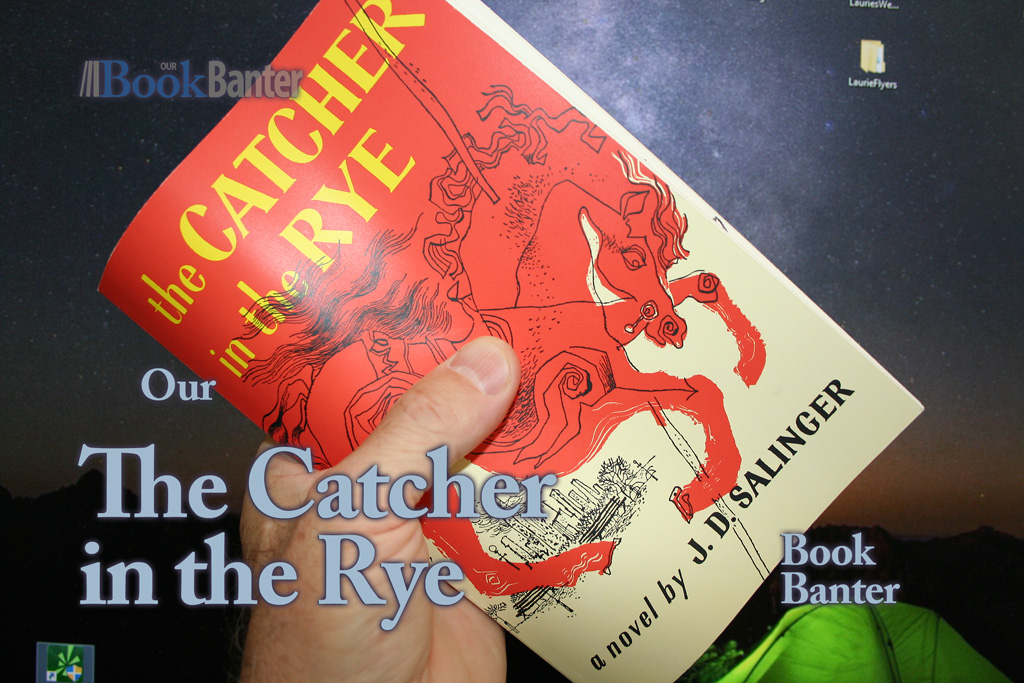
The Catcher in the Rye book banter
This will not be a book report
As I lay out the highlights from this book, I will not reveal too much of the plot. Instead, I will focus on Holden Caufield’s (the main character’s) thought-processes and the underlying psychological defenses which helped him cope.
Not a book about ‘teen angst’ or ‘alienation’
I disagree with the critics who claimed this book was about ‘teen angst’ or ‘alienation’—instead, it’s a book about a young person’s descent into mental illness.
Of course, part of that decline usually includes feelings of isolation, anxiety, and mood swings. But those feelings were heightened by Holden’s increasing symptoms of psychological decline and disorder.
Primarily, this controversial book was a simple story about three days in the life of a worldly, intelligent boy. He was born into a well-to-do family, and he was coming to grips with the reality of his mental illness.
Mental illness is the primary focus
Holden’s mental illness and its manifestations in his life was the primary focus of this book.
The Catcher in the Rye was humorous and dramatic
Despite the dramatic subject of his declining mental health, this book was very humorous. Or I should say, that Holden was very witty. He used his clever humor as a way to cope with the phoniness that he observed in the world.
Some of the things he said to other people were so funny, and so inappropriate at times, that I had to laugh out loud. He would often obsessively repeat certains words in his descriptions, along with certain swear words. I just found Holden’s way of communicating so clever and so hilarious.
Fantasy was how Holden coped with the phoniness
Often, he would combine humor with his fantasies. For instance, Holden used to dream up obsessive scenarios, like near the end of the book when he wanted to hitchhike out west and disappear. Or, when he wanted to run away with Sally, his pretty date, and start a new, unconventional life.
“I’m the most terrific liar you ever saw in your life. It’s awful. If I’m on the way to the store to buy a magazine, even, and somebody asks me where I’m going. I’m liable to say I’m going to the opera. It’s terrible…”—Holden Caufield [Chapter 3, page 22].
I had those type of fantasies all the time. At times, those fantasies also became my reality. When I was young, I’d make things up, just like Holden did. He used fantasy as a coping mechanism—that’s what made me understand and bond with this character as I read along.
Schizophrenia or manic depressive disorder?
Despite his humorous interactions, Holden’s reality was that he had a mental illness. Maybe he was schizophrenic. After all, he had obsessive delusions about things that might have seemed inconsequential to the other characters.
For instance, towards the end of the story, he became obsessed about erasing profanities on the walls of his sister’s school. He worried about his sister spending all her time thinking about the profanity, and what it meant.
Then, he worried that the school administrators might think he wrote the profanities if they saw him erasing them. Holden had lots of anxieties as his mental illness took over.
He also had delusional fantasies about things he would accomplish. Holden wanted to run away with the beautiful, but young Sally. They were both too young to run away together and start a secluded life. Sally understood that Holden’s suggestions were unrealistic, but to Holden, his dream made perfect sense.
Bipolar disorder?
Holden also experienced periods of great highs and lows. One minute, he was feeling great, and the next minute he expressed great sadness and feelings of depression. Those wild mood swings are symptoms of bipolar disorder.
When I was Holden’s age, I experienced many of those same mood swings. I’ve also had periods of great high and low feelings. That is why I identified so much with the main character in The Catcher in the Rye when I was a teen, and still do today.
While I was never diagnosed with a mental illness, and while my symptoms have moderated in my older age, I believe I might have had mild schizophrenia or bipolar disorder. Maybe I still do today—I don’t know.
Holden’s brother had died, and he couldn’t accept it
The death of Holden’s brother was difficult to accept. That loss was an overarching theme of grief that nudged Holden further into his mental illness.
Whatever happened to Holden?
While the book doesn’t definitively say what type of mental illness Holden had, it does reveal what happened to him. And that I can’t reveal—you’ll have to read this compelling book to find that out!
This banned book contains no subversive plots or conspiracy theories
As I read this book, I was also searching for Salinger’s supposed subversive ideas. For instance, critics have claimed his book promotes communism. Of course, that is absolute nonsense. The Catcher in the Rye contains no subversive communist plots.
Then, I struggled to understand how other people and conservative organizations believed Salinger’s book promoted alternative lifestyles, like we saw in the 1960’s and 1970’s. Of course, this book was published in 1951.
However, there is no subversive plot that promotes alternative lifestyles or communism or any other paranoid conspiracy theory. Thankfully, your family will be safe if a member reads The Catcher in the Rye.
TAKEAWAYS
The Catcher in the Rye book banter
So, there it is, if you want to know the truth. The Catcher in the Rye is one of the best books I have ever read, and I have read lots of books. Salinger was brilliantly able to transform a serious story about mental illness into a story that was delightful and compelling at the same time.
I especially enjoyed Holden’s insightful observations about his classmates, his parents and siblings, and his own harrowing descent into mental illness. For me, this is the book showed me that I was not alone in this world.
Content and photos by Doug Martin and Our Book Banter