
The first time I read The Perks of Being a Wallflower, I was already middle-aged. Unfortunately, I wasn’t able to empathize with many of the characters. Sure, I thought the book was good, but that it didn’t match the tremendously good reviews and adulation it had received. Now that I’m even older, I read it again, and I loved it. Here is our The Perks of Being a Wallflower book review.
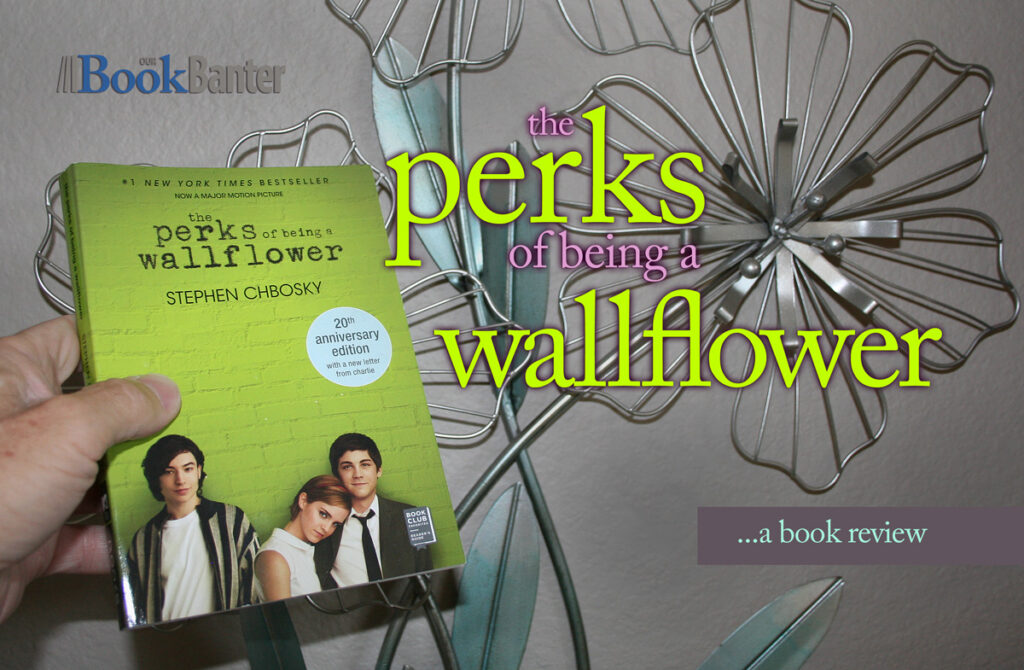
The Perks of Being a Wallflower book review
This is a book review, and not a book report
Rest assured that I will not reveal all of the surprising plot twists in this engaging novel. Instead, I’ll discuss Charlie, his family, and his classmates.
The plot of The Perks of Being a Wallflower
Stephen Chbosky’s innovative story revolves around Charlie. He is only 15-years-old, but he has already dealt with serious psychological issues and traumas in his young life.
The Perks of Being a Wallflower book review
Main characters of The Perks of Being a Wallflower
Charlie:
He’s a sensitive, highly emotional, teenage high school freshman. He’s been coping with mental illness triggered by memories of a trauma from his childhood.
In addition, Charlie experiences a lot of guilty feelings. One overwhelming feeling of guilt relates to the suicide of one of his best friends—really, his only friend from school.
He wonders why this friend didn’t talk to him about his depression, and Charlie feels very guilty—maybe he could have helped his friend. Charlie also feels guilty about many other events that happen in his young life.
Despite Charlie’s introverted nature, his English teacher, Bill Anderson, encourages him to engage more with the life he sees happening around him. So, he does make sometimes clumsy efforts to get more involved with life.
Michael Dobson:
Michael was Charlie’s best, and only friend at school. Unfortunately, Michael had committed suicide. It was a shocking, unpleasant surprise for Charlie, and he developed deep feelings of guilt.
He felt very guilty, and maybe even a little responsible, because Michael never talked to him about his depression and suicidal thoughts.
Charlie’s parents:
Charlie perceives his parents as being distant, but they always support him emotionally. And, they are quick to seek psychological help for their youngest child.
As I read his letters, I believed that Charlie’s parents were above-average, especially compared to my own family life as a child. His parents always supported him, and helped him when he needed their guidance.
They encouraged him in his academic studies, and in his social life. Actually, I thought they were fantastic parents!
Charlie’s older brother and sister: While Charlie did have the natural sibling rivalry and arguments with his older sister and brother, they, too, became more and more supportive of their younger brother. And thankfully, Charlie’s parents helped nurture their support.
Once again, I think Charlie was very lucky to have such supportive siblings, as well as very nurturing parents. Sure, it wasn’t a perfect family life, but it was good in comparison to other families. I’m not sure that he realized how lucky he was.
I didn’t see the movie, but this trailer makes the movie look pretty good—I think I might enjoy streaming it! But, the book was really, really good.
Aunt Helen:
Charlie’s aunt wasn’t alive when he was writing his letters, but he thought about her a lot. He really liked her and missed her.
However, near the end of his letters, Charlie has a disturbing memory that he struggled to repress. This unsettling memory was the cause of some of his psychological issues.
Bill Anderson:
Bill is Charlie’s English teacher. He enjoys the extra reading assignments that Bill gives him—the extra attention and the extra work assignments from Bill makes Charlie feel special. Bill encouraged Charlie to not just observe, but to participate in life.
In many of his letters, Charlie includes comments about the books he has read. I enjoyed reading his comments, because I’ve also read most of those books.
Patrick:
While most of Charlie’s classmates avoided interacting with him because of his ‘weirdness’, Patrick was different—he was a senior who befriended Charlie. He talked to Charlie at school, and even invited him to parties!
Charlie had never been to parties before. But, as he got to know Patrick, he also got to know Patrick’s sister, Sam, and Patrick’s other friends. As Patrick observed Charlie, he realized that Charlie was a ‘wallflower’, who observed other people, but didn’t get involved.
I really liked the Patrick character. He was a great influence on Charlie, and helped him meet and interact with diverse, new classmates. In fact, Patrick was a courageous character.
Sam:
This effervescent, bubbly high school senior was Patrick’s stepsister. Charlie was attracted to her, partly because of her personality, but also because of her looks.
Eventually, Sam and Charlie become platonic friends, but Charlie does yearn for more intimacy. Their relationship was very interesting, and a big part of Charlie’s story.
Other characters:
Of course, there were other characters in Charlie’s story. They include the artistic Mary Elizabeth, who Charlie briefly dated, until the socially inept Charlie did something foolish at a party, which really hurt Mary.
There was also Brad, who was a popular football player. Normally, the popular kids, especially the athletes, avoided any interactions with Charlie, and Brad was no exception. But, that wasn’t always the case!
The Perks of Being a Wallflower book review
So really, who is Charlie?
Charlie is deeply sensitive, and loves to observe, and then figure out the behavioral patterns and motivations of his classmates, and the members of his family. Unfortunately, Charlie doesn’t fit in with most of his classmates, and they consider him to be ‘weird’.
As a way of coping with his painful transition from a boy to a young adult, Charlie wrote revealing letters to a classmate. Charlie doesn’t reveal who this classmate was, but he trusted this person enough to write about the good times, and the bad times, and the emotionally wrenching experiences in his young life.
Charlie is an honest, honorable person
In his first letter to his anonymous classmate, dated August 25, 1991, Charlie wrote:
“I just need to know that someone out there listens and understands and doesn’t try to sleep with people even if they could have. I need to know that these people exist.”
Deeply personal letters in the format of a diary
During his first introductory letter, Charlie revealed his sensitive nature, his mental illness, and hinted at his difficult-to-deal-with childhood trauma. In subsequent letters, Charlie continued his story.
The narrative style of Charlie’s letters
Every week or so, Charlie would reveal to this anonymous person, and to us, his bumpy pathway to adulthood. This narrative style was very effective—I was able to slowly but deeply empathize with Charlie as he revealed more about his failures and successes while trying to make friends, along with his strong feelings of guilt.
Anne Frank had also used a similar narrative style
Anne Frank, the young girl who, along with her family, were hiding from the Nazis, also kept a similar diary. She had addressed her entries to her imaginary friend named “Kitty”.
That, too, was a very engaging way of revealing Anne’s difficult circumstances as she grew into a young teenager.
Suicide, sexual orientation, drug use
Throughout the book, The Perks of Being a Wallflower, Charlie discusses the painful suicide of a close friend. In addition, he honestly discusses the sexual orientation of his new friend, Patrick, and his experiences with homophobic classmates.
In addition, Charlie frankly discusses premarital sex, masturbation, illicit drug use, and all the problems (and benefits) young people might experience as they grow into adulthood.
Charlie, who was the weird guy, finds friends
Despite being a misfit, Charlie eventually develops close relationships. He goes to parties, but he usually doesn’t interact with other people. Instead, he just sits and observes.
As he watches, he sees his classmates engage in illicit drug use, as well as intimate make-out sessions. His classmates feel safe with Charlie being in the same room, because they know he will not gossip about them to his classmates.
Charlie has a unique personality
In fact, his one close friend, Patrick, who is an upperclassman and likes other guys, told other friends at a party about Charlie’s unique personality:
He’s a wallflower.”
Patrick, explaining Charlie to other people at the party
Then, Patrick continued to explain to Charlie what he meant by that quote:
You see things. You keep quiet about them. And you understand.”
Patrick talked to Charlie about his “wallflower” way of observing
That part really surprised Charlie. He wrote in one letter to his anonymous classmate:
I didn’t know that other people thought about me. I didn’t know that they looked [at me].”
Charlie, writing in a letter about how surprised he was that people noticed him
Charlie felt secure enough to cry in front of his new friends
And then Charlie continued to explain how surprised he was when Patrick introduced him as a ‘friend to everyone’ at a party:
“…I remembered that Sam introduced me as her friend to Bob. And I remembered that Patrick had done the same for Brad. And I started to cry. And nobody in that room looked at me weird for doing it. And then I really started to cry.”
Charlie, writing in a letter that he was introduced as a “friend”
Charlie was included, and he was grateful
That part really got to me. Then Charlie revealed that everyone at the party then raised their drinks, and made a toast: “To Charlie”. That was really good, and I felt happy for Charlie as I read that whole section.
He was finally welcomed by his new group of friends, and they valued him as a human being. That was the first time Charlie had experienced ‘inclusion’ among his classmates. Charlie was included, and he was grateful.
Charlie gets a reading list
Because Charlie was so bright, his English teacher gave him an additional reading list. They were classic, must-read books for literary students, and Charlie enjoyed discovering the new ideas presented in each of these classic pieces of literature.
In addition, his teacher asked him to write essays about those books. As Charlie started reading, he became enthralled. And, completing his extra assignments made Charlie feel ‘special’, as though his teacher appreciated his special abilities and his thoughts.
Some of the books on Charlie’s reading list included:
—The Great Gatsby, by F. Scott Fitzgerald
—The Catcher in the Rye, by J.D. Salinger
—Naked Lunch, by William S. Burroughs
—On the Road, by Jack Kerouac
—To Kill a Mockingbird, by Harper Lee
—The Fountainhead, by Ayn Rand
—Peter Pan, by J.M. Barrie
—Walden, by Henry David Thoreau
—Hamlet, by William Shakespeare
and a few more…
I really enjoyed Charlie’s comments as he read each book, especially the ones he made about William S. Burroughs’ controversial novel, Naked Lunch. That was a uniquely crazy book. But, just like Charlie, I couldn’t figure out what the author was trying to say.
However, the other books also presented unique perspectives about life, and they probably helped Charlie grow as a human being.
Usually, I don’t reveal the end of a book (or movie), but this is the last letter Charlie wrote, and it’s only in the 20th Anniversary Edition of The Perks of Being a Wallflower. Fortunately, this clip doesn’t reveal the storyline, so I don’t think it will ruin the book or the movie for you. This is a good scene!
The Perks of Being a Wallflower book review
Final Verdict
I was suspicious about rave reviews for The Perks…
The first time I had read this book, I think I was a different person. I mean, I was the same person, but I was suspicious about all the rave reviews this book had received.
And, I was disappointed, because initially I thought I would have been a lot like Charlie. In fact, I had, and still do have, many of the personal characteristics that Charlie had.
Was I jealous of Charlie’s support system?
But, maybe I might have been a little jealous of Charlie’s excellent support system. Or, maybe I was just resentful. Sure, his family wasn’t perfect, but they were much more supportive than the one I grew up in.
In addition, Charlie had a teacher who intervened and became a mentor. So, I guess I was jealous, and that made feel disappointed in my first reading.
Today, I reread this book and I loved it
Today, however, I’m an older guy who still loves to read, and I really loved this book the second time around. Fortunately, I could empathize and appreciate Charlie much more.
I felt bad for his traumas as a child, and his difficulties in forming relationships, or participating in life. Yet, I felt relieved and inspired that Charlie was able to rise above his circumstances, and survive his difficult journey into adulthood.
The 20th anniversary edition has a new letter
In fact, the 20th anniversary edition, which is the one I most recently read, includes a new letter from Charlie. He wrote it as a well-adjusted adult. In the letter, Charlie shared more thoughts about his life, and about the person who he was writing to.
Frank and honest content, but maybe a little shocking
It was a fitting ending, and gave me feelings of relief and hope! Despite the frank and honest content that might shock some people, I think every person, especially a young person, would benefit by reading this book.
Thanks for reading our The Perks of Being a Wallflower book review. If you have read the book, or have seen the movie (I haven’t), please share your thoughts!
Content and photos by Doug Martin and Our Book Banter


