
Years ago, I bought The Art of War by Sun Tzu after watching the movie, Ghost Dog: The Way of the Samurai. It was a unique film, and I became intrigued about how the protagonist studied and followed the teachings of Sun Tzu. I bought the book, and I discovered a new, unconventional mindset to frame my life. To see if Sun Tzu’s teachings could benefit your life in a profound way, read The Art of War review and book banter.
The Art of War review and book banter
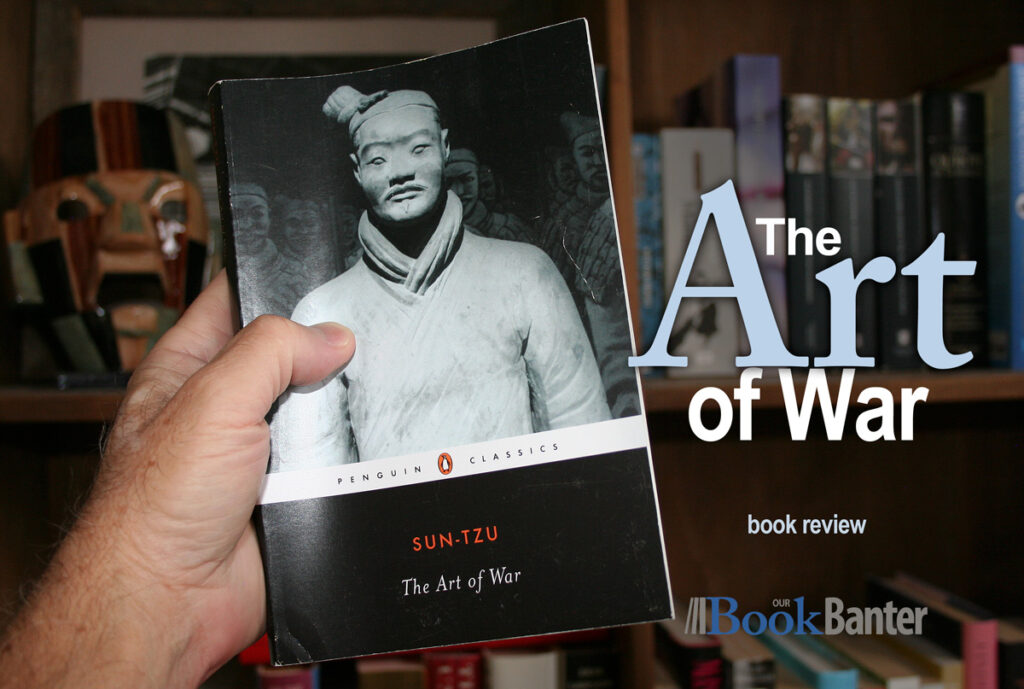
I am a neutral, detached observer of myself
I keep my copy of The Art of War by Sun Tzu (Master Sun) by my desk, and refer to it often. Master Sun’s teachings show me how to view life from an outsider’s perspective—it’s almost as though I’m outside of my body and viewing my thoughts as a neutral, emotionally unattached observer.
Then, from my detached perspective, I can evaluate my goals and obstacles, and create counterintuitive solutions. Amazingly, those counterintuitive solutions are usually the opposite way I usually might approach my problems.
Sun Tzu’s teachings are practical guides for a meaningful life
Even though Master Sun originally wrote his strategies to win wars for ancient Chinese rulers, those strategies are still useful. Today, many politicians use concepts from The Art of War to plan successful campaigns or to sway their supporters. In addition, athletes use Master Sun’s concepts when planning logistical moves for their games, and to create a winning mindset that is difficult for opponents to overcome.
For me, the book’s idea of viewing ourselves from a detached, unemotional perspective has helped me tremendously. I have learned to not take things (insults, slights) personally. Instead, I view myself as water, as a being without form, and a person who can adapt to changing circumstances quickly.
Being like water, that can change form and adapt quickly to storms and unexpected obstacles, is a very helpful philosophy—I try to keep this perspective in my mind each day. And, that’s why I keep The Art of War by my desk, where I can refer to it when needed.
The word ‘war’ symbolizes daily life
During Master Sun’s time (around 500 BC) in ancient China, war was a brutal reality of life. And, unfortunately, it still is today. I don’t even want to think about the horrors innocent people are experiencing right now in the Middle East.
But today, the word ‘war’ from The Art of War can symbolize more than just an armed conflict. It can also symbolize the logistical moves for winning an athletic competition. Or, it can personify how we interact with our coworkers, or how we view ourselves in a dynamic, changing environment of chaos, and how we adapt to that chaos.
Many of Master Sun’s teachings are counterintuitive. For instance:
A ruler must never mobilize his men out of anger; A general must never engage battle out of spite.”
(Pages 87-88, The Art of War)
That’s a counterintuitive perspective, to be sure. Certainly, that would never be a winning strategy in a Hollywood movie, but in real life, it can be and it must be.
Here is another example of a counterintuitive mindset from The Art of War:
The Way of War is A Way of Deception. When able, feign inability; When deploying troops, appear not to be. When near, appear far; When far, appear near.”
(page 6, The Art of War)
Key Concepts from The Art of War
Be flexible and unpredictable:
Master Sun advises us to be like water—we should have no preconceived form or notions. And, like water, we should adapt to changing terrain or circumstances quickly—we should flow like water.
In addition, we should be unpredictable, especially if we are competing in sports or preparing for an academic debate. We should pretend to be disorderly even while we are in complete control. And, we should appear unprepared or uninformed, even when we have memorized the terrain and thoroughly understand the subject matter.
Win without fighting:
Or, win without putting yourself at great risk. War, and life, is risky, and if we allow ourselves to foolishly blunder into a ‘war’, we might lose, and suffer a great cost.
So, to win without fighting, we must psychologically understand our obstacles, and we must have a superior strategy to overcome any barrier, without putting ourselves at great risk.
Thoroughly understand yourself and your obstacles [enemies]:
To win, we must know ourselves—we must thoroughly understand our strengths and weaknesses. Equally important to victory, is to thoroughly know your enemy [obstacle]. We must completely understand their assets and terrain, and study their past behaviors (history lessons).
Know the enemy, know yourself. And victory is never in doubt, not in a hundred battles. He who knows self but not the enemy will suffer one defeat for every victory. He who knows neither self nor enemy will fail in every battle.”
(page 19, The Art of War)
Live a capable, ethical life:
We must live our life in an honorable manner, which will garner respect and loyalty. In addition, we should face each obstacle [enemy] with courage and wisdom.
Paradoxically, we must also possess benevolence and sincerity. For instance, Master Sun recommended:
Treat prisoners of war kindly, and care for them. Use victory over the enemy [obstacle] to enhance your own strength.”
(page 13, The Art of War)
Use strategy instead of brute force:
Instead of spending your life fighting a time-wasting battle, or engaging in a brutal confrontation, use strategy to win without fighting. Master Sun advised us to:
Ultimate excellence lies not in winning every battle, but in defeating the enemy without ever fighting.”
(page 132, The Art of War)
Ghost Dog: The Way of the Samurai movie excerpt. This is a violent scene, but the movie content is so much more profound than what is portrayed in this one scene. This is the movie that introduced me to The Art of War.
TAKEAWAYS:
The Art of War review and book banter
To summarize, The Art of War by Sun Tzu is a deceptively simple, but profound book of directives. Master Sun’s directives, or teachings, can help us to remain flexible while we employ our intellectual abilities to surmount obstacles.
They are counterintuitive commands, and are usually the opposite of how we might normally deal with conflicts. So, ‘just do the opposite’ might be a pretty good, but simplistic summary for The Art of War review and book banter.
If you’d like new ideas about how to live a more meaningful life, I highly recommend you add The Art of War to your library.
Photos and content by Doug Martin and Our Book Banter


