
After reading The Odyssey, I realized that I knew very little about Greek mythology. Previously, the subject never intrigued me, but now it does! So, I read Joseph Campbell’s masterful book on mythology from 1949, The Hero with a Thousand Faces. And wow, that book really opened my eyes, not only about mythology, but also the basis of our world’s major religions! If you’d like to learn more, read The Hero with a Thousand Faces book review, and see if you aren’t as astonished as I was!
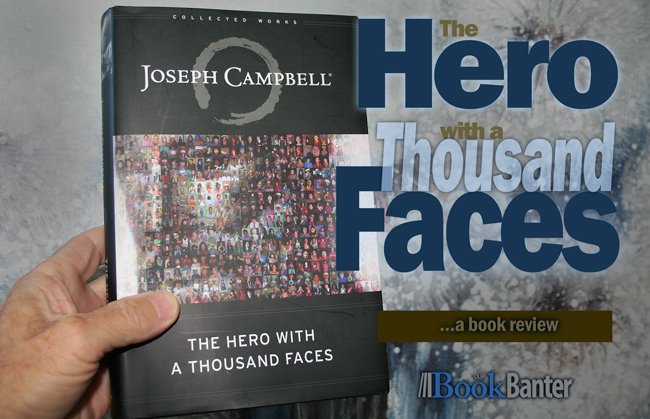
The Hero with a Thousand Faces book review
The theme of The Hero with a Thousand Faces
The main reason I wanted to read The Hero with a Thousand Faces was to learn more about mythology. Surprisingly, I learned more about mythology than I ever imagined.
All myths and religions have a similar structure
This book explores many of the myths, including popular religions, handed down by generations of different cultures throughout our world. And I was shocked to learn that, no matter where in the world or what culture they originated from, all myths and all religions share a similar pattern, format, and structure.
This format is called a monomyth, which includes the important elements of a hero’s transformational existence. Those elements include a hero’s separation or departure. Then, the hero experiences events along the way that could be difficult, life-threatening, or revelatory, and then the hero returns, sometimes miraculously, to his family, community, or followers.
To prove the author’s thesis, he includes excerpts from various myths, folktales, and religions that prove his point. Shockingly, even today’s Christian religion followed a monomyth structure, and the author provided scriptures that illustrate his amazing premise!
Who was Joseph Campbell?
Joseph Campbell was first a brilliant student who became obsessed with mythologies. His journey into the land of mythology started with an obsessive fascination with totem poles.
He loved reading about the cultures who created totem poles, and the stories those totem poles were telling and archiving for the next generations. From there, other forms of folkloric storytelling and mythologies captured the author’s imagination.
Through his intensive studies, Campbell became an expert in not only mythologies, but also the psychological musings of Carl Jung and Sigmund Freud.
Intensive philosophical and psychological explorations
Campbell’s book is an in-depth, philosophical and psychological exploration of myths and religions. In fact, I was blown away by the author’s comprehensive knowledge and exhaustive research on this fascinating subject.
Exhausting to read, but worth it
For me, reading this book was like taking a 3-credit course on philosophy, along with psychology. And, even though it could be exhausting to absord all the different examples, the time I spent to thoroughly read and understand made it all worthwhile!
Well-written with detailed research
Reading this book was so pleasurable, despite, or maybe because of its high scholarly rigor. The author used precisely chosen words, and contained them in phrases that painted a definitive picture.
For me, reading such a well-written book, especially after wading through years of social-media-junk-posts, is awe-inspiring! It’s no wonder that Campbell inspired such confidence in his students when he was a professor. I wish I could have been there in his classes.
Some quick examples of monomyth elements
Since I recently read The Odyssey, I’ll use this as one example (but you can read many more examples from around the world in this book). Odysseus, our ‘hero’, left home to fight a war. Afterwards, he took a long journey home, and experienced many life-changing events. Most villagers thought he had died.
For example, he battled with viscious beasts and prickly, lower-level gods. However, he did enjoy intimate relations with a goddess, and those intimate relationships between humans and gods are common in myths.
Finally, after a total time of almost twenty years, Odysseus miraculously returns to his beloved home and village. His son and wife are overjoyed, and Odysseus settles a final score with some people in the village.
Coincidentally, the Christian religion is based on an intimate relationship formed between their god and a young woman. To protect the woman’s reputation, the religion claims that it was a spiritual impregnation (however that might work?), but if you and I are honest with ourselves, we all know what really happened with Mary.
Understanding Mythology with Joseph Campbell from the Joseph Campbell Foundation. So fascinating!
The Hero with a Thousand Faces book review
Why do all mythologies contain monomyth elements?
While reading this fascinating book, I keep wondering about how diverse cultures can create such similarly structured beliefs. In other words, why do all mythologies, religions, and folklores contain the same monomyth elements?
Did we evolve to believe in higher powers?
Have human beings evolved to believe in higher powers? How is it possible that no matter where in the world we live, and what cultures we were brought up in, that our religious and mythological beliefs are so similar?
Do our primitive beliefs help us live better?
Does having these somewhat primitive beliefs in our life help us to live better? After all, there must be some evolutionary purpose for us to have these similarly structured belief systems—am I correct?
Or, did a higher power program us?
Or, did some higher power, like a god, program us all to believe in our ‘Heroes’ who transition through life? And, even though the author hinted at the question, he didn’t provide an answer. That’s okay, because that wasn’t the purpose of this book.
I don’t know the answer
But, The Hero with a Thousand Faces has left me pondering even more about our existence, and the meaning, if any, of our lives. Why are we here? Unfortunately, I don’t think I’ll ever know for sure, one way or the other.
We’ll never know for sure
Sadly, I’ll never know for sure if there’s a god that has programmed or guides us, or if we’re just transitioning through life like our religious heroes seem to do. And, since I will never really know for sure, why waste the short time I have on Earth by pondering those unanswerable questions? I don’t know, but I do think it’s so utterly interesting!
FINAL VERDICT
The Hero with a Thousand Faces book review
Mythology and its framework
Joseph Campbell’s masterfully researched and precisely written book, The with a Thousand Faces, is a must-read book about mythology. It details the framework that all timeless myths, folklores, and religions contain.
Intensive study of philosophy and psychology
In short, I thought that reading this book carefully was like taking a 3-credit college course in philosophy and psychology. The book was so thought-provoking and informative, and I’m glad to took the time to read it!
You will love The Hero with a Thousand Faces
If you enjoy studying mythology, or enjoy religious studies and philosophical thoughts, then I’m sure you will appreciate reading The Hero with a Thousand Faces!
The Hero with a Thousand Faces comments!
Thanks for reading our book review and book banter of The Hero with a Thousand Faces. If you’ve already read the book, please share your thoughts in the comments section below!
Content and photos by Doug Martin and Our Book Banter


